

.webp)
Paradis Suites; Tourist Apartment Investment on the Costa Blanca
May 17, 2026
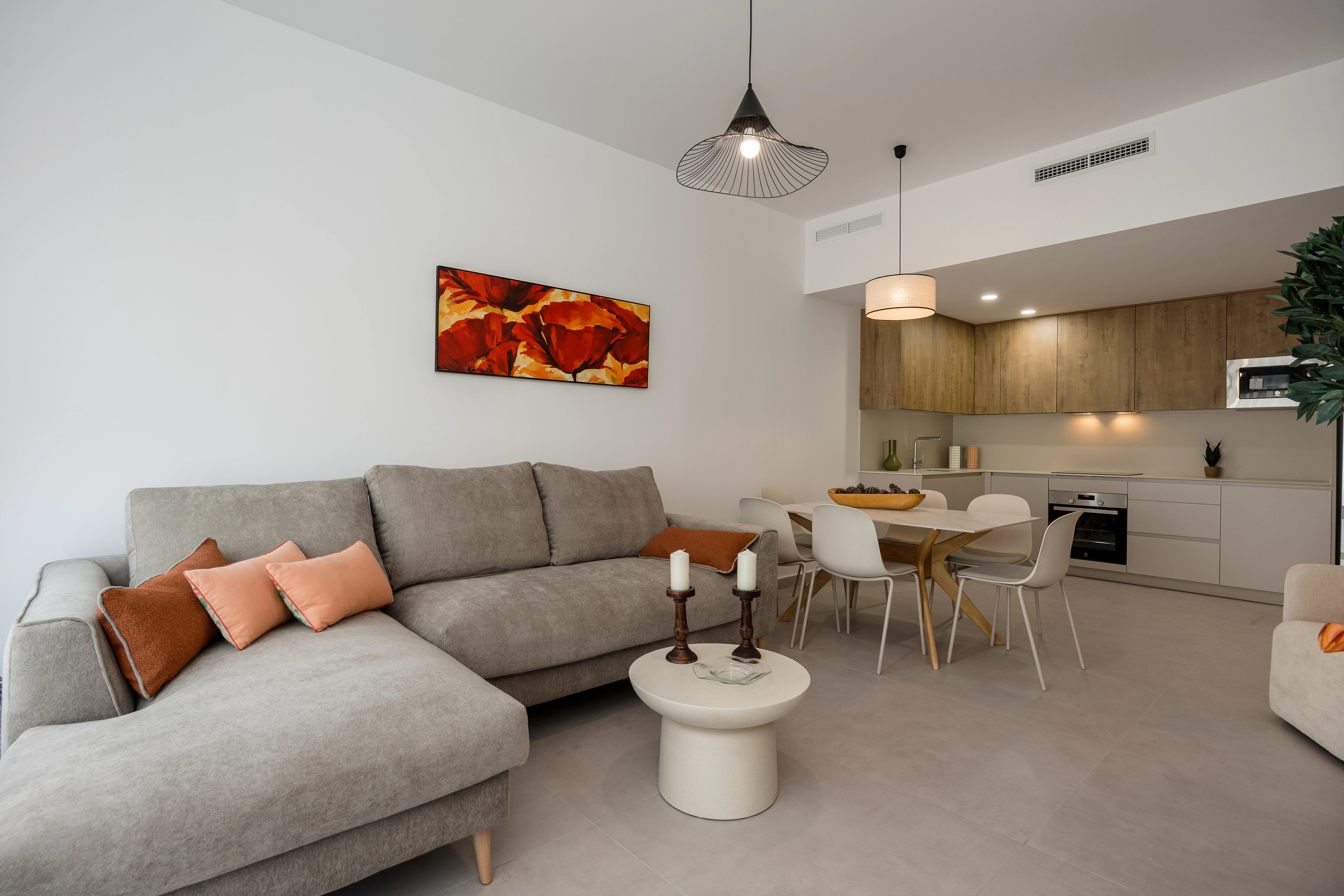
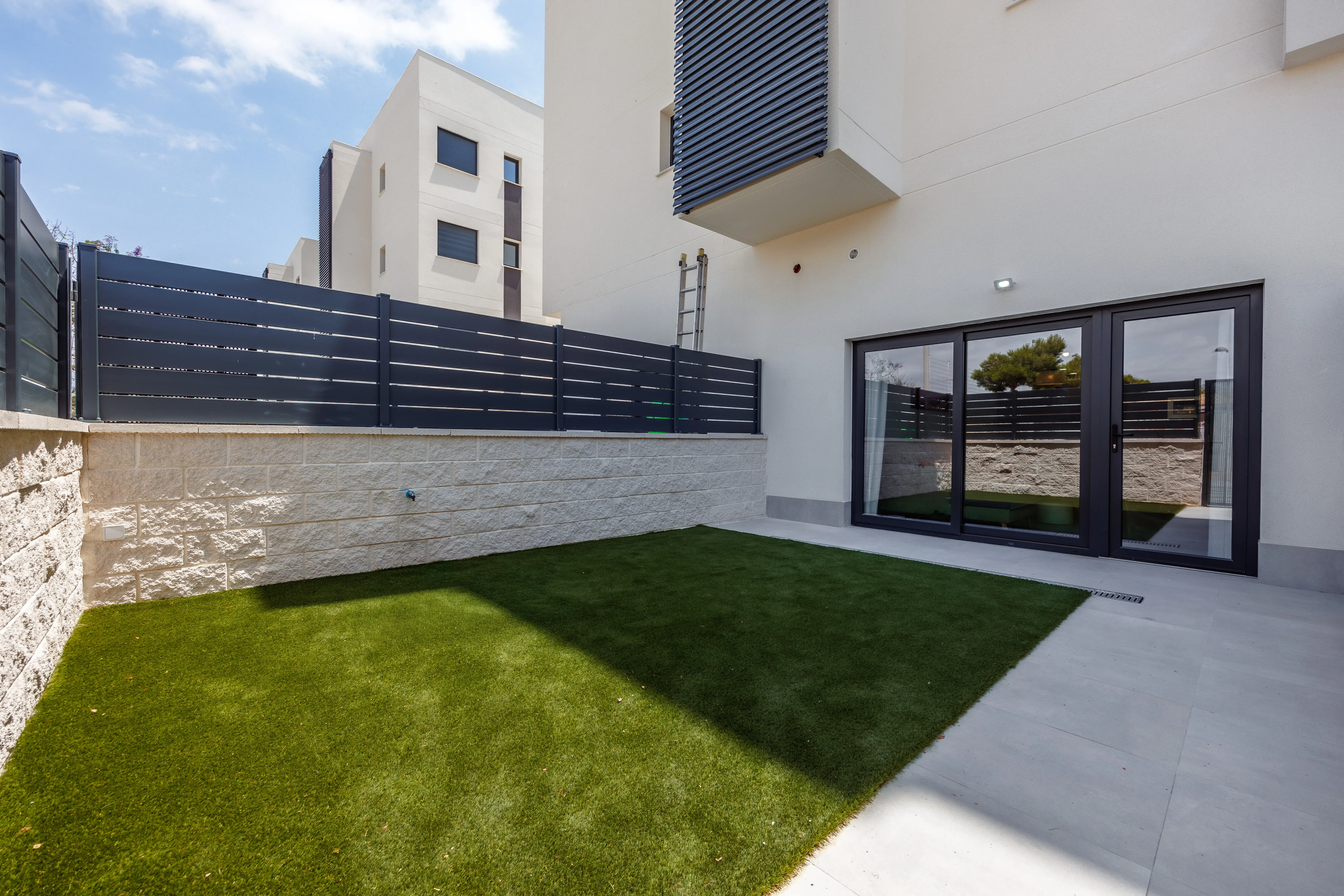
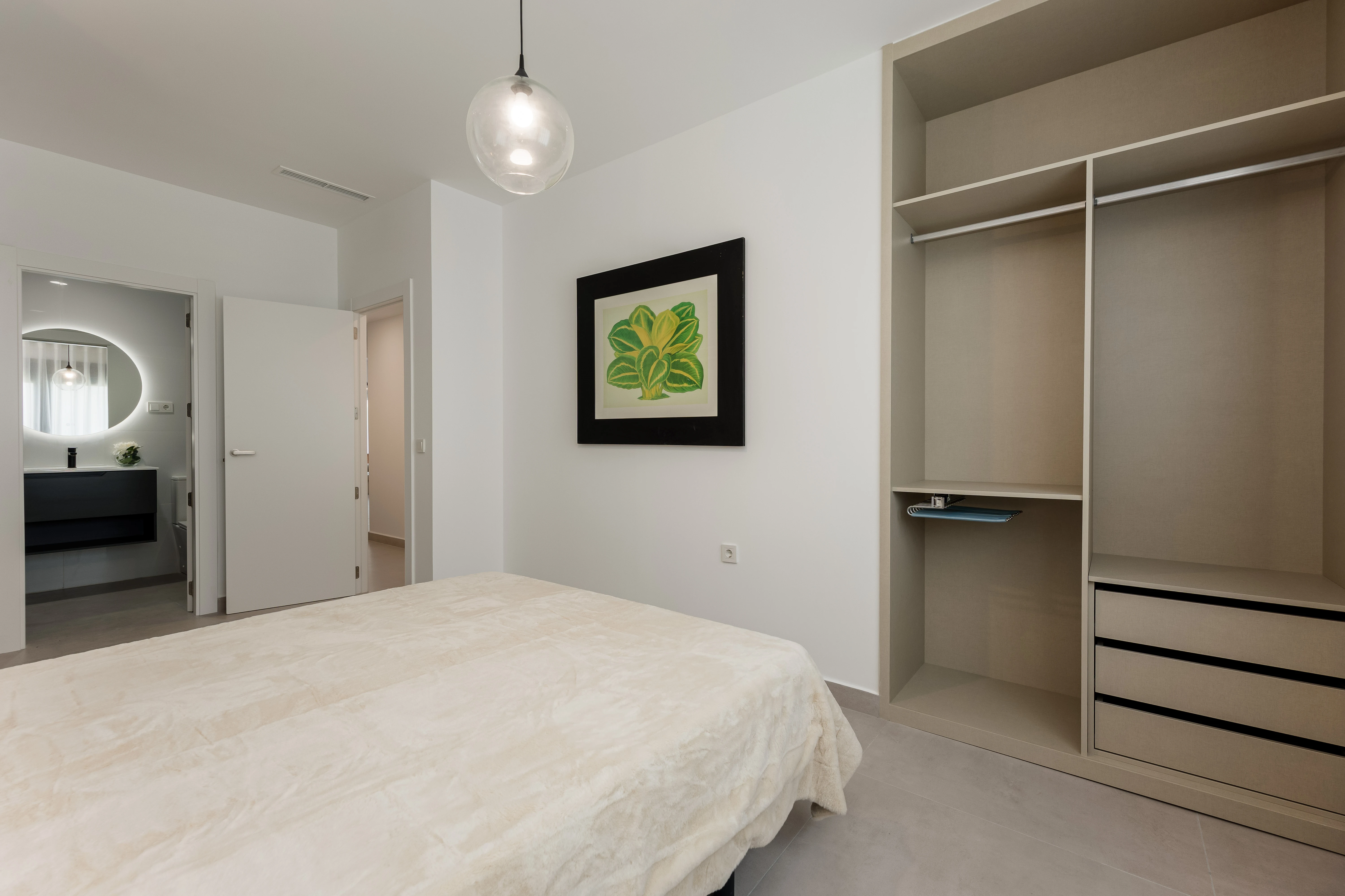
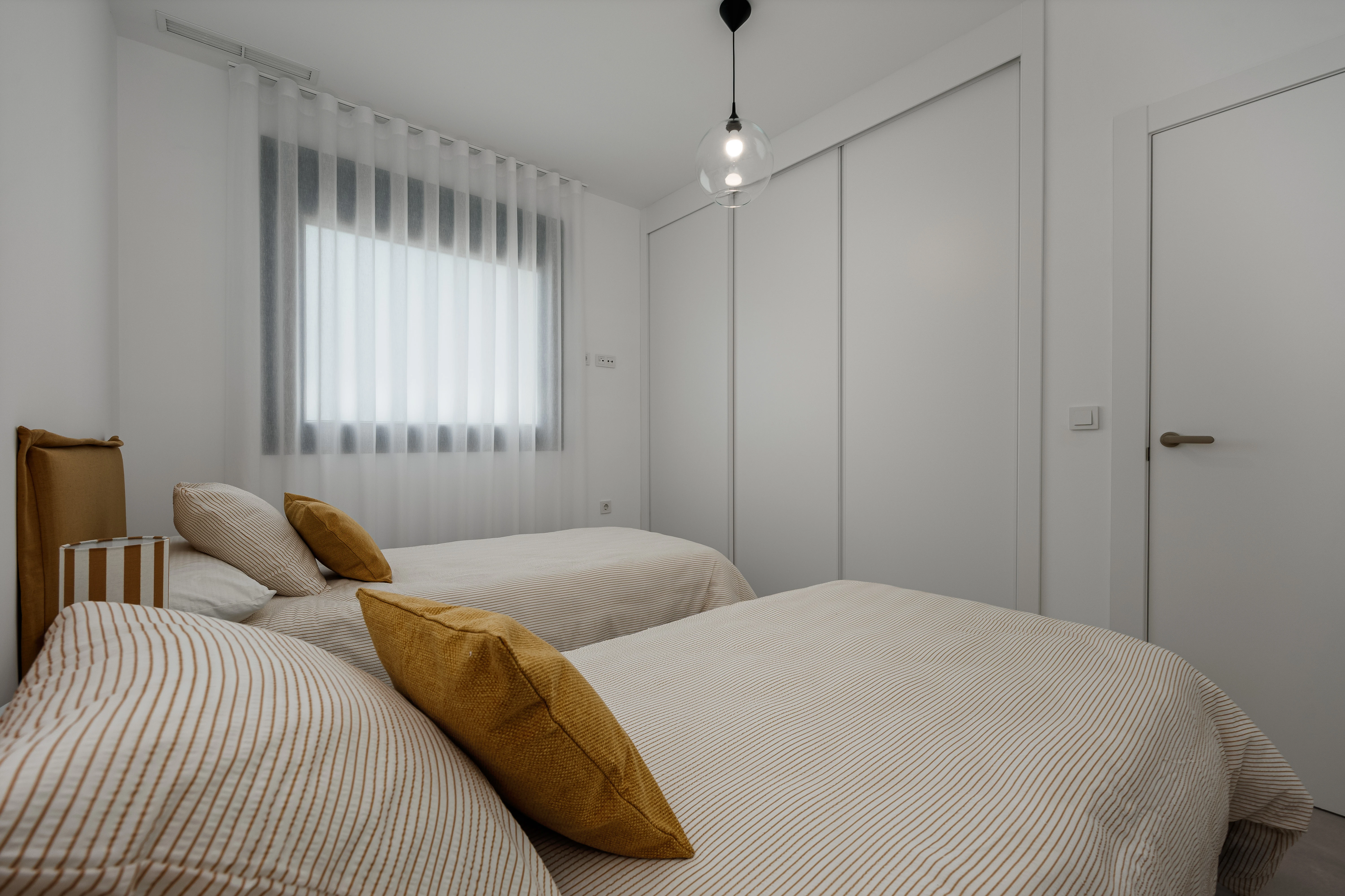
Eight commercial premises fully adapted and licensed for tourist residential use, inside two recently completed buildings in central Villajoyosa. Ground floor · independent street access · 2 and 3 bedrooms · private terrace-gardens up to 37 m² · from €275,000 (+ 21% IVA) · delivery before December 2026.
Villajoyosa (La Vila Joiosa in Valencian) sits at the quieter midpoint of Spain's Costa Blanca, between the high-rise energy of Benidorm and the boutique calm of Altea. Its painted old-town seafront, artisan chocolate heritage (Valor's factory is in town) and Blue Flag beaches attract a stable international visitor base — predominantly Belgian, Dutch, French, German and increasingly Polish — much of which returns season after season.
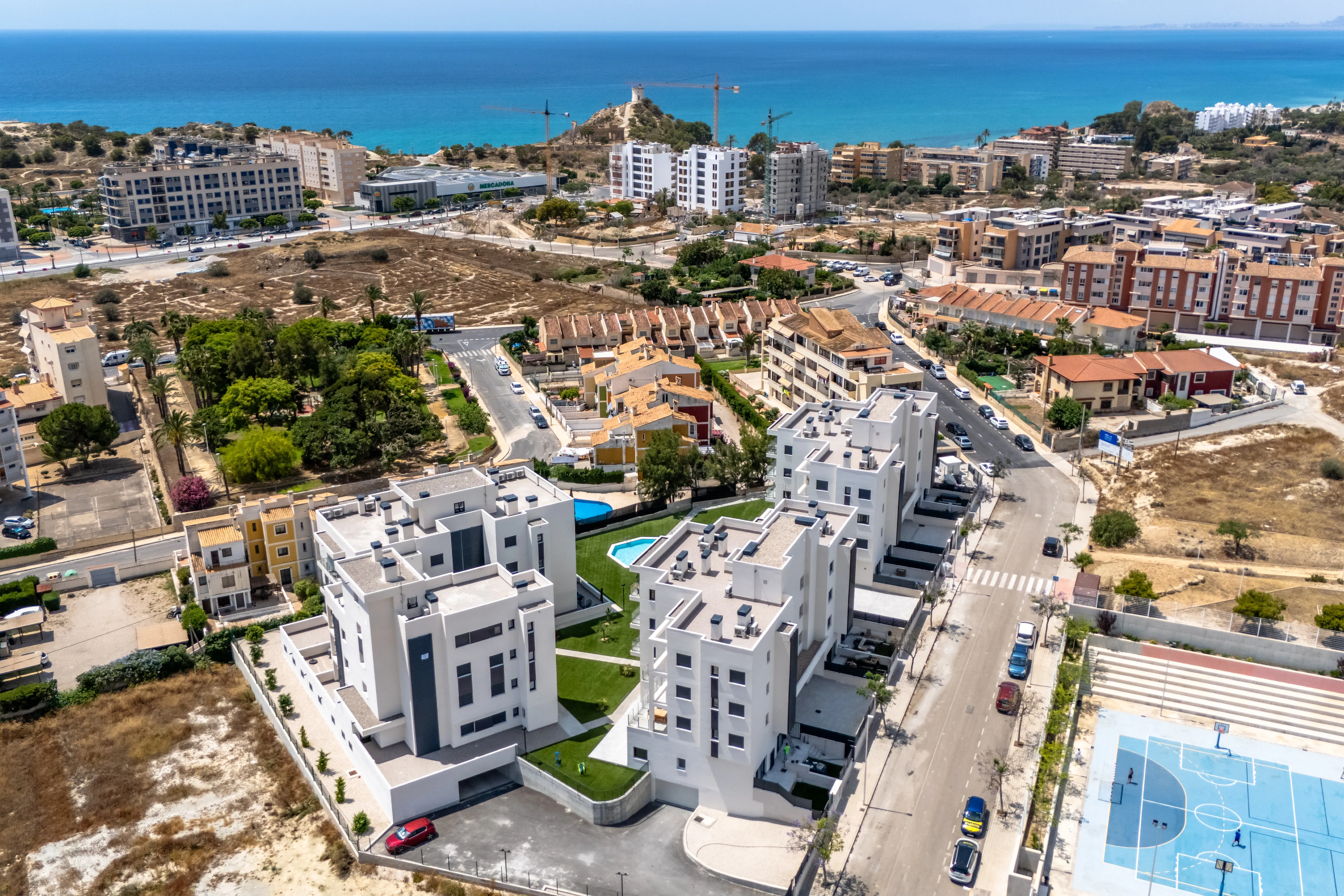
These eight units are legally classified as commercial premises (locales comerciales) inside two completed residential buildings, fully adapted and individually licensed for tourist residential occupation. The legal classification is not cosmetic — it determines how the asset is taxed, how the licence behaves over time, and what role the host residential community can play in the unit's future. We discuss each implication below.
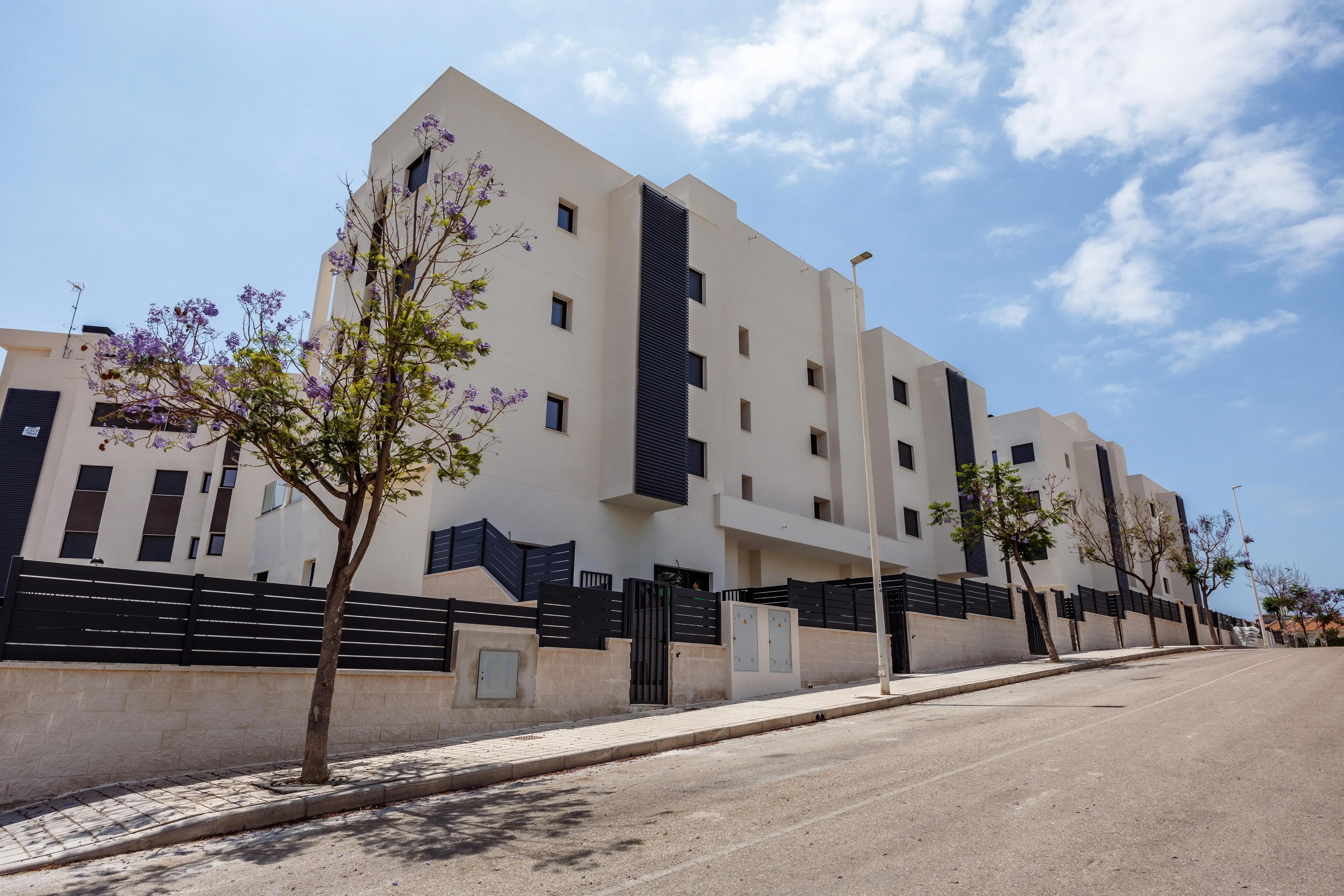
Two routes to short-term rental investment on the Costa Blanca dominate the market: (a) buy a residential apartment and apply for a tourist licence, or (b) buy commercial premises already adapted and individually licensed for tourist use. On the platforms — Airbnb, Booking — the guest experience looks similar. The two structures behave very differently underneath.
The tourist-rental use of the eight commercial units is expressly established in the Statutes of the Community of Owners of Residencial Moratella and registered at the Land Registry. Every buyer in the Residential signs — as part of the public deed of sale — an acknowledgement that the eight ground-floor commercial premises will be used as tourist dwellings. In other words, the tourist activity in these units is not exposed to a future community vote: it is a founding rule of the community, accepted in writing by all owners at the moment of their own purchase.
Residencial Moratella is organised around two separate Communities of Owners:
Conversely, the tourist dwellings located in the commercial premises do not have the use or enjoyment of the residential amenities — pool, garden or interior urbanisation. Two clearly separated user profiles coexist: the residential owner making residential use, and the tourist operator making commercial use.
A residential tourist flat offers one thing the commercial unit does not: access to communal amenities (pool, gardens, lifts). For a buyer prioritising personal-use comfort over yield mechanics, that may be the right trade. For the investor whose priority is licence durability, cost efficiency and a clean future exit, the commercial structure wins on more dimensions than it loses.
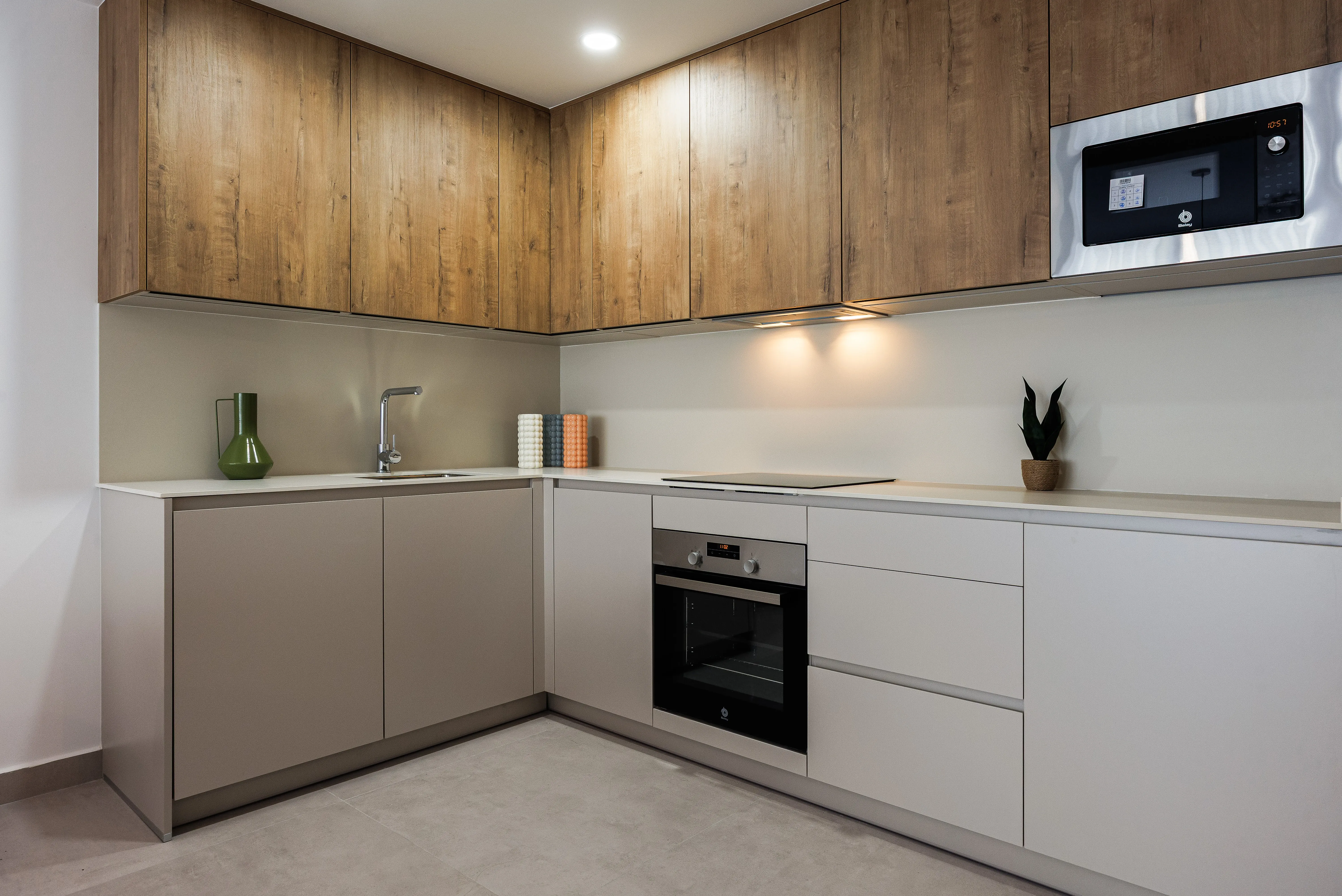
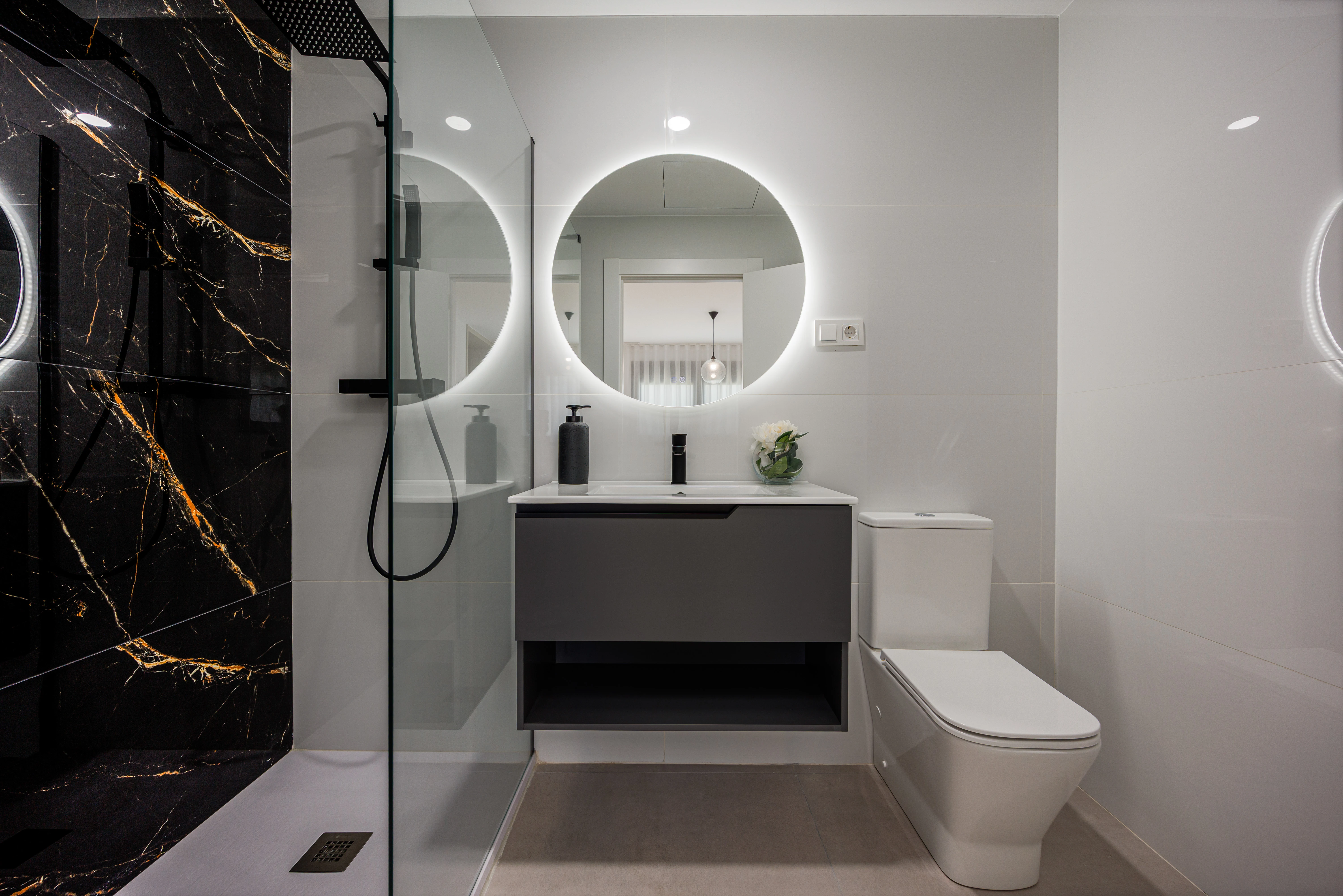
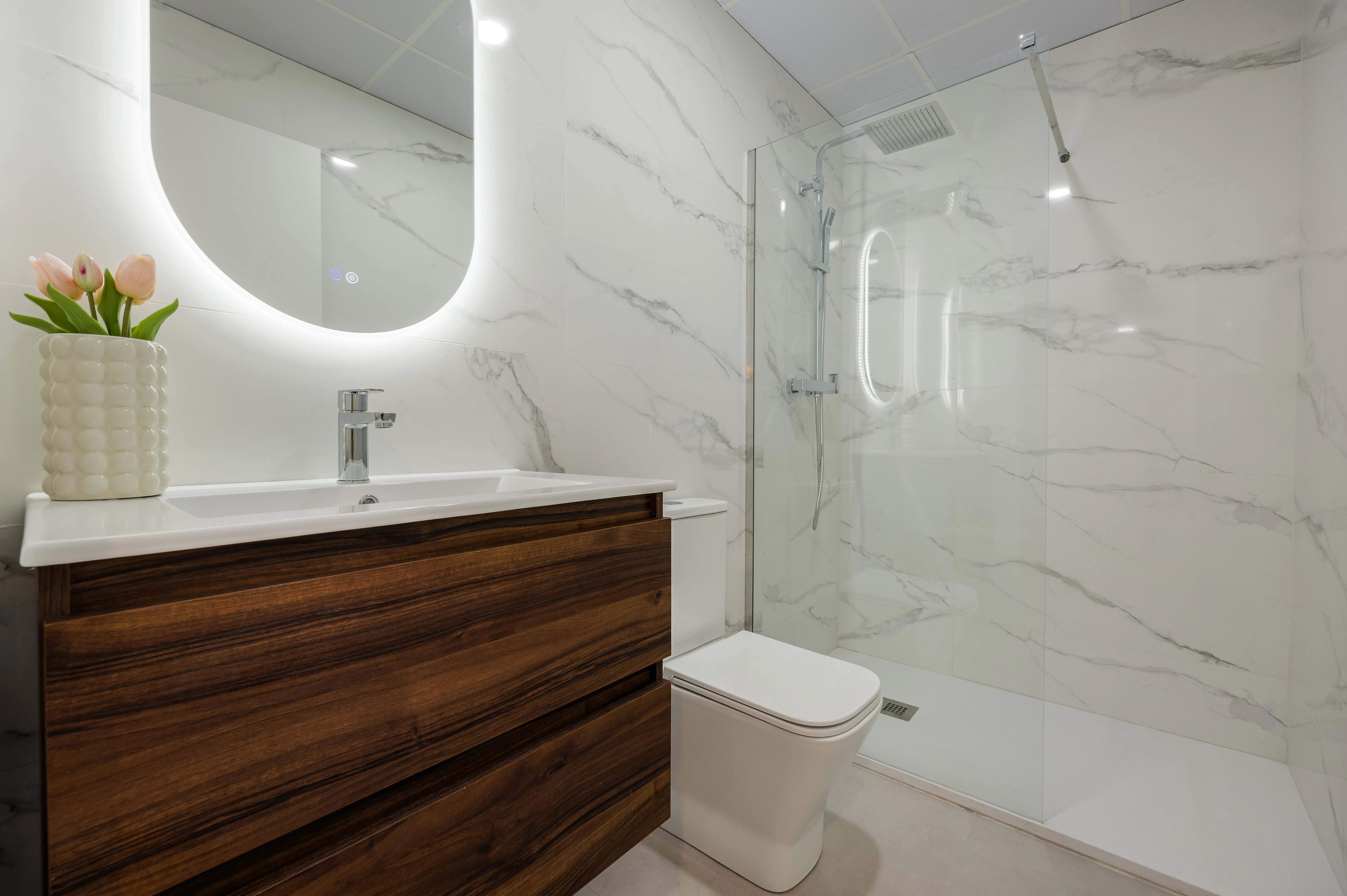
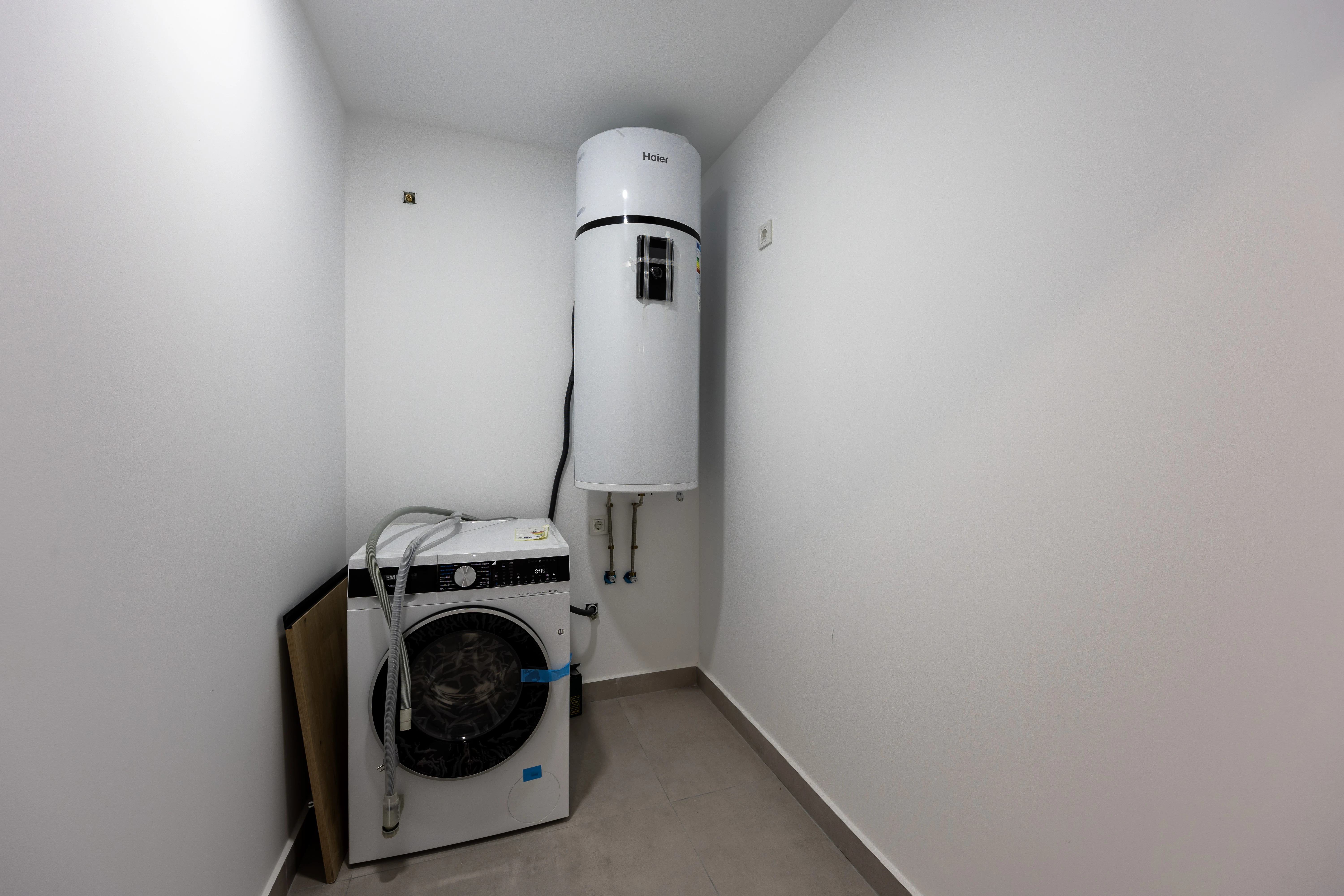
Delivered unfurnished but turnkey-ready for fit-out:
An extra layer of legal certainty. Each commercial unit is delivered with an individual Municipal Certificate — issued by the Villajoyosa Town Hall Secretariat, endorsed by the Mayor-President, and supported by the Municipal Technical Report — confirming ex ante that the touristic-rental use is compatible with the applicable urban regulations. Investors who own commercial premises destined to economic activity thus enjoy stronger guarantees to operate their short-term rental than owners of residential properties who intend to rent them out under a purely residential licence.
Furniture, decoration and rental fit-out are the buyer's responsibility. Your distributing agency can recommend local interior designers experienced in short-stay product.
Three-stage payment · all amounts over the agreed price + 21% IVA
This is the section investors most often misread, so we are going to be precise rather than promotional. The conclusion is positive, but it is conditional.
These apartments attract 21% IVA on acquisition (commercial premises rate). On a €280,000 unit that is €58,800 — vs €28,000 at the 10% residential rate. Short-stay tourist rentals operated without hotel-like services (no daily cleaning, no breakfast, no reception) are currently IVA-exempt in Spain.
With no output IVA on the rental income, the input IVA paid on acquisition is not currently recoverable for the typical private-investor profile.
So today, the 21% is a real cash cost compared to the 10% residential rate. We will not pretend otherwise.
The Spanish government, aligned with the EU's VAT in the Digital Age (ViDA) package and the broader political push to even the playing field between hotels and short-stay platforms, has signalled an intent to require VAT on tourist rentals operated by individual investors and property managers. Public timelines point to 2027–2028 for entry into force. The exact rate, scope and transition mechanics are still in regulatory text.
If the reform passes broadly as anticipated, three things follow for a buyer today:
The bottom line — stated honestly. A buyer at today's prices can plausibly recover most or all of the 21% IVA over the years following the reform, provided (i) the reform enters into force broadly as anticipated, (ii) the unit is genuinely operated as a tourist business, and (iii) the regularisation mechanism in the final regulation works in the way most tax practitioners expect. A residential buyer at 10% IVA has no equivalent recovery path under any version of these reforms.
The tourist-use licence permits owner occupation for up to 120 days per calendar year — the cap under current Comunidad Valenciana regulation for licensed tourist apartments. The remaining 245 days the property is available for short-term rental through whichever channels you prefer (Airbnb, Booking, Vrbo, direct booking, agency partnership).
You operate the rental activity yourself, or through a property management company of your independent choice. We do not offer rental management.
Typical mix observed in comparable Villajoyosa stock:
We do not publish income projections. Short-stay yields depend on pricing strategy, fit-out quality, property manager, seasonality and platform mix — all of which sit outside our control as promoter. Anyone showing you a guaranteed yield headline on a deck is selling, not forecasting.
Our recommendation: before signing the private contract, contact two or three property management companies operating specifically in the Villajoyosa / Marina Baixa segment. A good local PM will deliver a rental analysis based on real comparables (live AirDNA / Mabrian data, their own historical occupancy, ADR per typology). That is the most honest projection you can obtain.
Even though these units sit on a legally stronger footing than a residential dwelling — commercial-use classification, urban-compatibility certificate already secured, tourist licence granted per unit and outside the residential community — the owner is still required to complete the administrative registration of the tourist activity with the Comunidad Valenciana, exactly as would be the case for a residential dwelling holding a tourist licence.
The procedure is the sector standard: registration in the Registro de Empresas, Establecimientos y Profesiones Turísticas de la Comunitat Valenciana by means of a Responsible Declaration (Declaración Responsable), followed by the definitive allocation of the individual VT reference (Vivienda Turística code) that will identify the unit on Airbnb, Booking.com, Vrbo and any other listing platform.
There are no additional requirements, no extra costs and no parallel process derived from the commercial classification: the owner's administrative burden is identical to that of a licensed residential dwelling. The regulatory advantages described elsewhere in this document (municipal and community-level protection, absence of common-area exposure and lower recurring fees) coexist with the ordinary duty to keep the tourist activity properly registered and current with Valencian regional regulation.
The registration file is submitted through the Registro de Empresas, Establecimientos y Profesiones Turísticas de la Comunitat Valenciana (Tourism Registry). The core documents are:
Ongoing obligations after registration: keep the Guest Registry Book, transmit traveller data to the Ministry of the Interior through the SES.HOSPEDAJES platform (Real Decreto 933/2021), and file the Impuesto sobre Estancias Turísticas de la Comunitat Valenciana if and when it enters into force.
Commercial premises (locales comerciales) inside two completed residential buildings, fully reformed and individually licensed for tourist residential use.
The 10% reduced rate applies to dwellings classified as residential. Commercial premises attract the standard 21% rate. The 21% is currently a non-recoverable cost for most private investors, and is expected to become recoverable once Spain implements the 2027–2028 IVA reform on tourist rentals — subject to the final regulation.
Not for the typical individual investor today. Tourist rentals on Airbnb/Booking operated without hotel-like services are currently IVA-exempt, so there is no output IVA against which to deduct the 21% on acquisition. The recovery becomes possible if and when the expected reform enters into force. Your asesor fiscal can confirm your specific position.
Yes — up to 120 days per calendar year, the cap under current Comunidad Valenciana regulation. Outside personal use, the apartment is available for tourist rental.
No. The units do not belong to the residential comunidad, so they have no access to the communal pool or other communal areas of the host building. Each apartment has its own private terrace-garden (25–37 m²) as outdoor amenity.
No — delivered unfurnished. Kitchen is fully equipped with appliances, and air-conditioning + aerothermal heating are installed. Furniture, decoration and rental fit-out are the buyer's responsibility.
You do, or a property manager of your independent choice. We do not offer property management services. We recommend talking to two or three local PMs in the Villajoyosa / Marina Baixa area before purchase to validate the income assumptions.
Before November 2026. The residential host buildings are already structurally complete; the interior fit-out of the commercial units is the work currently in progress.
This document is for informational purposes and does not constitute legal, tax or financial advice. Information on tax treatment, IVA recoverability, the 2027–2028 reform of short-stay rentals, mortgage availability, inheritance and any other regulatory matter should be confirmed with your own qualified Spanish advisors (abogado + asesor fiscal) on the basis of your personal or corporate position. Rental income estimates and benchmark ranges must be validated independently with local property managers. Areas, prices and delivery dates are subject to final measurement, contract and applicable regulation. Photographs and renderings are indicative. Monsora SL · CIF B-03311008 · Registered in the Mercantile Registry of Alicante, Volume 1573, Sheet A-20125.

